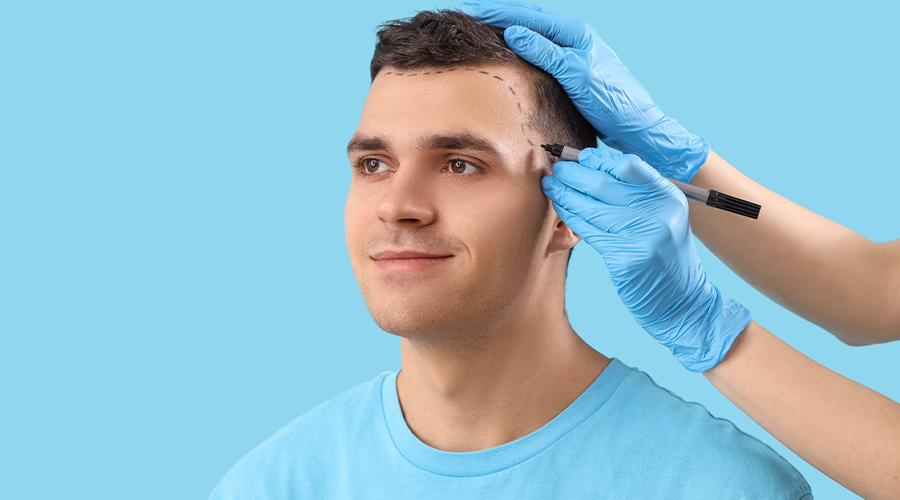
If you’ve been researching hair transplant options, you’ve probably come across two names more than any others: DHI and FUE. Both are minimally invasive, both produce natural-looking results, and both have thousands of satisfied patients worldwide. So what’s actually different between them and more importantly, which one suits your specific situation? The answer isn’t as straightforward as most clinics make it seem, and that’s exactly what this guide is here to clarify.
Understanding the Basics: FUE Hair Transplant
Follicular Unit Extraction commonly known as FUE has been the gold standard in hair restoration for over two decades. The procedure involves harvesting individual hair follicles from the donor area (typically the back and sides of the scalp) using a micro-punch tool, then implanting them into the thinning or bald regions. There are no linear incisions, no stitches, and recovery is noticeably faster compared to older strip techniques.
What makes FUE particularly versatile is the surgeon’s ability to plan and execute large-scale sessions. It’s well-suited for patients who need significant coverage whether that means filling in a receding hairline, restoring the crown area, or addressing diffuse thinning across a wider zone. The channels where follicles are placed are created in advance, giving the surgical team full control over the angle, direction, and density of placement.
FUE also allows extraction from alternative donor sites when the scalp’s donor area is limited. Body hair transplantation using follicles from the beard or chest is typically performed using the FUE technique, making it a valuable option for patients with advanced hair loss patterns. If you’d like to learn more about candidacy for this approach, the team at Vatanmed’s hair transplant department offers thorough pre-procedure consultations to assess your donor density and overall suitability.
Understanding the Basics: DHI Hair Transplant
Direct Hair Implantation — DHI — is a refined variation of the FUE method, but with one fundamental difference in technique: the implantation step. In DHI, extracted follicles are loaded directly into a specialised implant pen (the Choi Implanter Pen) and placed into the scalp without the need to pre-open channels. The extraction and implantation happen as a continuous process, which significantly reduces the time each follicle spends outside the body.
This single difference has meaningful implications for graft survival rates and the precision of placement. Because the Choi Pen controls depth, angle, and direction simultaneously as each follicle is inserted, surgeons can achieve extremely fine-tuned results particularly in areas like the hairline, where natural direction and density are critical to an aesthetically convincing outcome.
DHI is also the preferred technique for patients who want to undergo transplantation without shaving the recipient area. In certain cases, existing hair can be preserved around the implantation zones, which is a significant advantage for those who want a less noticeable post procedure period.
Key Differences Between DHI and FUE
While both methods originate from the same principle — moving follicles from a donor zone to a recipient zone the technical execution differs enough to affect outcomes in specific scenarios. Here’s a direct comparison of the most clinically relevant distinctions:
- Channel creation: FUE requires pre-made incisions before implantation; DHI combines both steps using the Choi Pen, reducing the window of graft exposure.
- Graft survival: DHI minimises the time follicles are held outside the body, which can support higher graft viability — particularly in large sessions where timing is critical.
- Precision: DHI offers more granular control over placement angle and depth, making it especially suitable for hairline design and temples.
- Shaving requirements: Standard FUE generally requires full shaving of both donor and recipient areas; DHI can sometimes be performed with partial or no shaving of the recipient zone.
- Session size: FUE can accommodate very large graft counts in a single session; DHI sessions may be somewhat more limited due to the additional time required per follicle.
- Technical skill: DHI demands a higher level of surgical precision and specialised training, which means the quality of the clinical team matters even more.
- Healing: Both methods leave no linear scarring and have similar recovery trajectories, though some patients report slightly faster initial healing with DHI due to the smaller entry points.
Who Is the Best Candidate for FUE?
FUE is typically recommended for patients who present with moderate to severe hair loss and require high graft counts to achieve their desired result. It’s also the more practical choice when multiple sessions are planned over time, as the extraction approach allows the donor area to be worked systematically session by session.
Patients who are comfortable with a full shave prior to the procedure and who prioritise maximum coverage over the finest possible hairline precision are generally excellent candidates for FUE. Men with Norwood Scale classifications between III and VI tend to see particularly strong results with this method.
- Patients requiring 3,000 or more grafts in a single session
- Those with significant crown or mid-scalp thinning
- Individuals who have previously undergone strip (FUT) procedures
- Patients interested in body-to-scalp hair transplantation
- Those who prioritise full coverage over localised refinement
A detailed scalp and hair analysis is always the starting point at Vatanmed before any recommendation is made. Graft count estimates, donor density assessments, and scalp condition evaluations are all part of the planning process, because no two patients and no two treatment plans are ever the same.
Who Is the Best Candidate for DHI?
DHI tends to be the preferred choice when precision outweighs volume. It’s particularly well-suited for patients in the early to moderate stages of hair loss who are primarily concerned with hairline refinement, temporal reconstruction, or adding density to areas that still have some existing hair.
Because DHI doesn’t require pre-made channels, the implantation can be performed between existing hairs without disturbing them. This makes it an excellent option for women experiencing hair thinning, who often retain a significant portion of their hair and don’t need or want full shaving of the recipient area.
- Patients focused on hairline design, temples, or localised areas
- Women with diffuse thinning who want to preserve existing hair
- Those who prefer minimal to no shaving of the visible areas
- Individuals with early-stage hair loss seeking preventive density restoration
- Patients prioritising naturalness of growth direction and angle
The Role of Technology and Planning in Your Result
Whether you choose FUE or DHI, the quality of the outcome depends far more on the clinical planning and the surgical team’s expertise than on the method name alone. Advanced digital hair analysis tools allow clinics to map donor density, assess miniaturisation patterns, and simulate post-procedure results giving both the patient and the surgeon a clear picture of what’s achievable before a single follicle is moved.
At Vatanmed, the pre-procedure planning phase includes a comprehensive scalp mapping assessment, where factors like follicular unit density, hair calibre, scalp elasticity, and hairline geometry are all evaluated. This isn’t a formality it’s what separates a genuinely personalised plan from a generic template applied to every patient who walks through the door.
Medical support protocols also play a role in outcomes. Post-operative care including platelet-rich plasma (PRP) therapy, medical-grade hair care products, and structured follow up appointments can meaningfully support the long-term growth and survival of transplanted follicles.
What to Expect During Recovery
Both FUE and DHI share a broadly similar recovery timeline. In the first few days after the procedure, mild redness and swelling around the recipient and donor areas is completely normal. Most patients feel comfortable returning to light work within three to five days, and the small crusts that form around newly placed grafts typically shed within ten to fourteen days.
The transplanted hairs will enter a shedding phase around weeks two to four a normal and expected part of the hair growth cycle that often catches patients off guard. New hair growth typically begins to emerge between months three and four, with more noticeable density from month six onward. Full results are generally visible at the twelve-month mark, although the final texture and density can continue to improve for up to eighteen months.
- Avoid direct sun exposure on the scalp for at least four weeks
- Sleep with your head slightly elevated for the first few nights to minimise swelling
- Do not scratch or rub the recipient area, even if it feels itchy during healing
- Follow the clinic’s washing protocol precisely in the first ten days
- Avoid strenuous physical activity for at least two to three weeks
- Attend all scheduled follow-up appointments so progress can be monitored
Common Misconceptions About Both Methods
One of the most frequent misconceptions is that DHI is always superior to FUE. In reality, neither method is universally better they serve different clinical needs, and the “best” technique is the one that aligns with your specific hair loss pattern, scalp characteristics, and aesthetic goals.
Another common misunderstanding is that higher graft counts automatically mean better results. The distribution and angulation of follicles are just as important as the number arguably more so in visible areas like the hairline. A modest number of expertly placed grafts will outperform a large session with poor design every time.
Finally, patients sometimes assume that one procedure will be sufficient for life. Hair loss is a progressive condition, and the native hair surrounding transplanted follicles may continue to thin over time. Ongoing management with appropriate medical treatments is an important part of preserving your overall result, and this should be part of the conversation during your initial clinic consultation.
Frequently Asked Questions (FAQ)
1. Is DHI more painful than FUE?
Both procedures are performed under local anaesthesia, which means neither should be painful during the session itself. Patients may feel mild discomfort during the anaesthetic injections, but the transplantation process is not painful. Post-operative sensitivity is typically mild and manageable with standard over the counter pain relief. DHI does not inherently cause more discomfort than FUE individual experience varies more based on pain threshold and the extent of the procedure than the technique used.
2. Can women have DHI or FUE hair transplants?
Yes, both methods can be performed on women, though DHI is more commonly recommended for female patients. Women with hair thinning particularly diffuse thinning or frontal hairline recession often prefer DHI because it allows implantation without shaving the recipient area, meaning the procedure remains largely undetectable to others. A thorough consultation is essential to determine whether a woman is a suitable candidate, as female hair loss can have a variety of underlying causes that need to be assessed and managed alongside any surgical intervention.
3. How do I know which method is right for me?
The right method depends on several individual factors: the extent of your hair loss, the density of your donor area, your hairline goals, whether you’re comfortable with shaving, and the number of grafts estimated to achieve your desired result. This is why a face-to-face or digital consultation with a hair transplant specialist is the essential first step no online guide or generalisation can substitute for a proper clinical assessment of your scalp and hair characteristics.
4. Will the transplanted hair look natural?
When performed by an experienced surgical team, both DHI and FUE produce results that are indistinguishable from natural hair growth. The key factors are the artistry of hairline design, the angle and direction of implantation, and the distribution of density across the treated zones. Single-follicle units are typically used at the hairline to mimic the fine, natural transition seen in unaffected hair and this level of detail is what determines whether a result looks genuinely natural or artificially uniform.
5. How long do the results of a hair transplant last?
Transplanted follicles taken from the donor zone are genetically resistant to the hormone DHT, which is the primary driver of androgenetic (pattern) hair loss. This means the transplanted hairs are designed to be permanent. However, any native hair surrounding the transplanted follicles may continue to thin over time if the underlying hair loss condition is not managed medically. For this reason, most specialists recommend combining surgical restoration with an ongoing medical management plan such as appropriate medications or supportive treatments to protect the long term investment of the procedure.
Choosing between DHI and FUE is a decision worth taking seriously and it’s one that should be made with proper guidance from a qualified specialist who has assessed your individual situation. At Vatanmed, every hair restoration journey begins with an honest, detailed conversation about what’s possible, what’s realistic, and what approach will genuinely serve you best over the long term. For personalised advice tailored to your hair loss pattern and goals, feel free to get in touch with our team.
 Türkçe